





Partnering charter
Contents |
[edit] Introduction
A partnership charter is an agreement between the parties to a construction contract designed to ensure that each party acts according to stated principles intended to achieve the successful delivery of the project. Essentially, it is a tool for conflict prevention and may cover project delivery, people, teamworking and commercial criteria (see below).
[edit] Benefits
Using a partnership charter may:
- Act as a guide for signatories.
- Increase co-operation and trust.
- Reduce ambiguity.
- Reduce the likelihood of disputes.
- Improve the likelihood of long-term success.
A model partnering charter has been made available as part of the 2016 JCT suite of documents (PC/N 2016), although this is non-binding. Partnering charters may be based on PC/N 2016 in its entirety or they may use it as a guide to draw up a bespoke agreement which may either be binding or non-binding. Whichever is selected, the form of partnering charter chosen should operate in tandem with the main construction contract and expires when the main contract expires.
The team involved as signatories to the charter agree to work together on the project ‘...to produce a completed project to meet agreed client needs, and meet agreed quality standards’. Each team member must sign the charter after which they are duty-bound to adhere to its principles. It is important to remember that the creation of a partnering agreement does not necessarily create a legal partnership or agency relationship between the parties.
Upon signing, the signatories agree to act:
- In good faith.
- In an open and trusting manner.
- In a co-operative way.
- In a way that avoids disputes by adopting a ‘no blame culture’.
- Fairly towards each other.
- Valuing the skills and respecting the responsibilities of each other.
The objectives of PC/N 2016 are measured against performance indicators that are established prior to signing. These include:
Delivery:
- Right first time with zero defects.
- Use best and safest practice.
- Encourage innovation and the efficient use of resources.
- Maximise the efficiency of respective contributions.
People:
- Consider neighbours and others affected by the project.
- Respect each other.
- Promote an enjoyable and healthy working environment.
- Provide training and staff development.
- Foster tolerance.
Teamworking:
- Focus on the customer.
- Plan and promote clear and effective communication.
- Engender a working environment that is conducive to shared problem solving.
- Provide mutual support.
- Involve all members of the supply chain in the partnering concept.
Commercial:
- Add value and enhance reputations.
- Create incentives for maximising the rewards of all parties.
- Provide transparency and certainty of information.
- Provide feedback.
Bespoke partnering agreements may give greater emphasis on any of the above principles according to the priorities of the project. For example, innovation may be highlighted with a special board formed to develop proposals for methodology improvement and greater cost-effectiveness.
[edit] Related articles on Designing Buildings Wiki
- Advancing the outcome of challenging infrastructure projects through project alliancing.
- Adversarial behaviour in the UK construction industry.
- Agreement.
- BS11000.
- Collaborative practices.
- Construction contracts.
- Framework agreement.
- Latham Report.
- NEC3.
- NEC4 Alliance contract.
- Partnering and joint ventures.
- Partnership.
- PPC 2000.
- Relationship management.
- Rethinking construction.
- SPC 2000.
- Supply chain management.
- Team management.
[edit] External resources
Featured articles
Check out some of the best features and news from Designing Buildings as well as key stories from around the web.
Construction Management, 8 July

NEETs crisis drives interest in trades, but apprenticeships barriers remain.
Passive fire protection webinar
MEP services penetration seals.

Where its at podcast (and video) - The role of the Architectural Technologist as an Expert Witness.
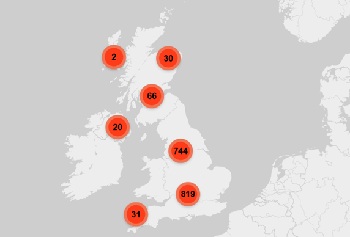
More than 200 remarkable buildings added to SAVE’s Buildings at Risk register.

Government scraps pre-application consultation for Nationally Significant Infrastructure Projects.
Historic England and infrastructure

New projects offer opportunities for the historic environment and local communities.
Construction Management, 2 July

Construction deaths halve in two years.
Green Book changes to drive investment in all parts of UK.
Minimum energy efficiency standards (MEES)

CIAT briefing on response to consultations for privately rented non-domestic properties.
Connect, collaborate, shape the future

Registration now live for UK Construction Week Birmingham.

CIOB announces Saul Humphrey FCIOB as new President for 26/27 term.

A quick, simple, and zero-bills solution to prevent overheating.